Different Intent
HVAC Replacement Leads Aren't the Same as Service Leads
A service shopper often arrives with an immediate problem: “My AC stopped working.” The desired action is usually straightforward—call, schedule, or get someone to the home.
A replacement shopper may know only that the system is old, unreliable, inefficient, or increasingly expensive to repair. Before contacting a contractor, that homeowner may ask what replacement costs, which system type fits, whether repair is still reasonable, whether a heat pump makes sense, whether financing exists, how long installation takes, and what happens next.
Service Shopper
- Immediate comfort problem
- Wants help quickly
- Primary CTA: Call or Schedule
- Shorter research path
Replacement Shopper
- Considering a major purchase
- Researching systems and contractors
- Wants pricing and financing context
- May not be ready for an appointment
A website centered only on “Call Now” and “Schedule Service” can serve repair demand well while underserving replacement research.
Customer Journey
Build the Website Around the Replacement Buying Journey
Replacement intent develops across several stages. A useful website answers the question at each stage instead of forcing every visitor directly into “Request an Estimate.”
Some visitors will move quickly. Others will revisit the site several times. The goal is not to force a rigid funnel; it is to make the next useful answer or action easy to find.
Tactic 1
1. Build Pages for Replacement Intent, Not Just HVAC Services
A generic “HVAC Services” page rarely answers the questions behind a replacement decision. Create dedicated pages that match the company's actual offerings, such as HVAC replacement, AC replacement, furnace replacement, heat pump installation or replacement, mini-split installation, or complete-system replacement.
Not every contractor needs every page. Each page should reflect real services and explain who the service is for, signs replacement may make sense, equipment choices, what affects pricing, financing availability, the installation process, common questions, and the next step.
Useful replacement pages should help the homeowner make sense of the purchase. Repeating “We provide quality installation—call today” does not give a researcher much reason to stay or return.
Tactic 2
2. Stop Giving Every Visitor the Same CTA
Different visitors are ready for different commitments. The website does not need dozens of competing buttons, but it should offer sensible next steps across the buying journey.
The purpose is to match the conversion opportunity to readiness. The comparison of an HVAC pricing calculator vs. a traditional contact form explains why both paths can belong on the same website.
Tactic 3
3. Give Homeowners Useful Pricing Context
Replacement shoppers commonly want to understand cost before committing to a sales interaction. Contractors have several levels of transparency available:
No Pricing
Call or request an estimate to learn anything about cost.
Pricing Education
Explain the factors that change replacement cost.
Typical Ranges
Give broad context without tailoring it to the visitor.
Interactive Estimate
Use guided inputs and contractor-controlled pricing.
Not every company must publish fixed prices. Contractor-controlled online estimates can provide meaningful context while leaving sizing, scope, ductwork, electrical work, and installation conditions for professional verification.
Read more about whether HVAC contractors should show prices online and how an online HVAC quote tool works.
Tactic 4
4. Capture More Than a Name and Phone Number
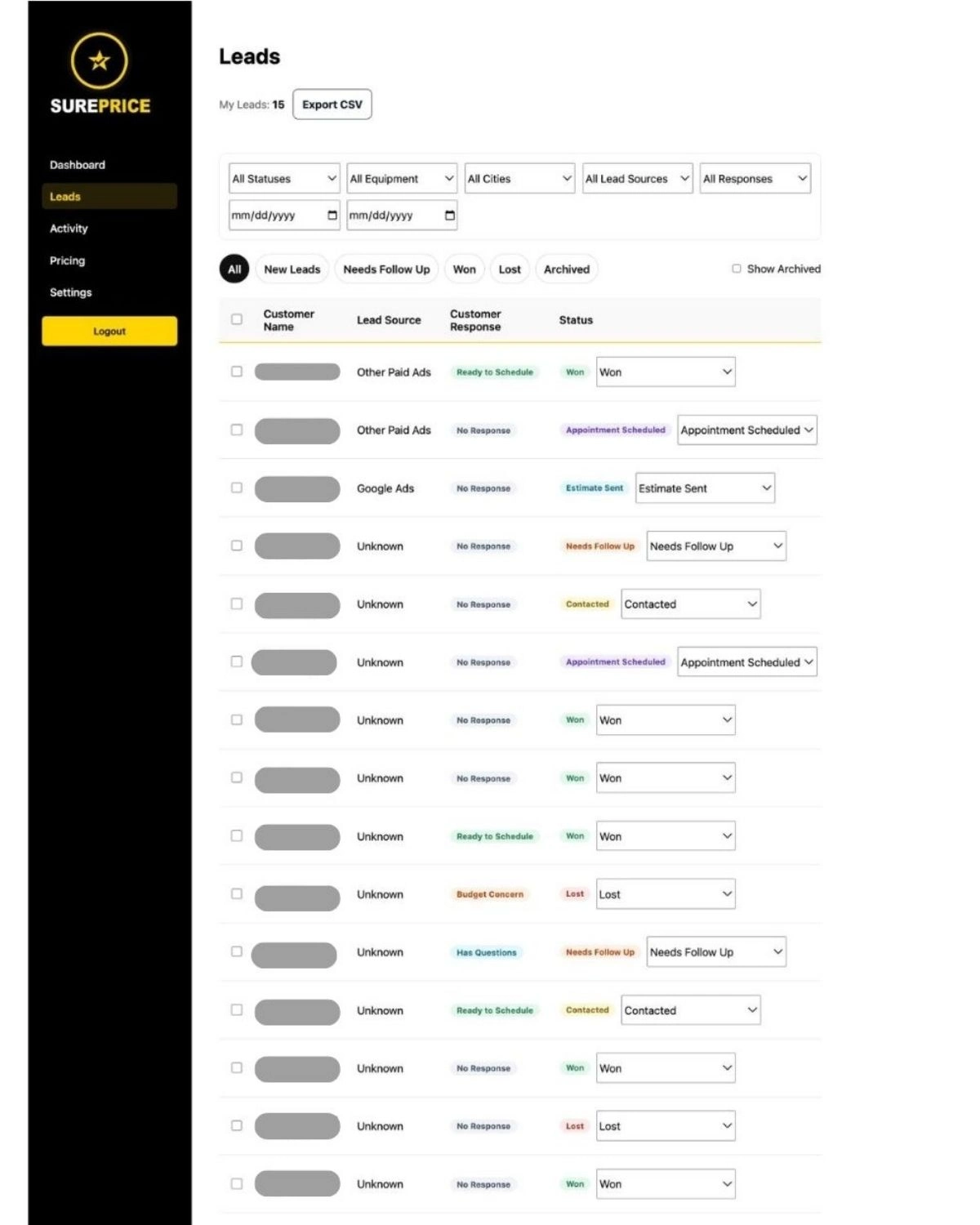
A generic lead may contain a name, phone number, email, and “Need new AC.” A contextual replacement opportunity can include customer information, the system being considered, relevant replacement selections, estimate context, buying stage, and lead source where collected.
This context helps the contractor understand what the homeowner already explored before making first contact. It does not guarantee a sale, but it can create a more informed conversation. Learn which details and buying signals help define a high-quality HVAC replacement lead.
Tactic 5
5. Don't Hide Financing Until the Kitchen Table
Replacement is a substantial purchase, and some homeowners need to understand whether payment options exist before scheduling an appointment. Make financing availability, an appropriate financing CTA, and straightforward FAQs visible during research.
Where supported by the contractor's pricing setup, a website may present configured payment information alongside an estimate. Keep the language accurate and avoid promising approval or terms that depend on a lender. This is not financial advice; it is simply making the contractor's available purchase paths easier to understand.
Tactic 6
6. Give Homeowners Reasons to Choose You Before Asking Them to Contact You
Replacement shoppers evaluate more than price. Use genuine trust signals: real reviews, licensing where relevant, actual team and installation photos, brands installed, warranty information, service area, truthful years in business, a clear process, and supportable customer stories.
Place these signals near the decisions they support. Installation photos belong on installation pages. Warranty explanations belong near equipment and process details. Reviews should be real and attributable. Fake trust badges or generic stock imagery do little to answer whether the contractor is credible.
Tactic 7
7. Make It Easy to Research on a Phone
Homeowners may research contractors casually before they are ready to call. Make that experience usable with readable text, fast pages, obvious CTAs, short forms where appropriate, restrained popups, easy calculators, a clickable phone number, and clear navigation.
A long page can still work on mobile when headings, spacing, and visual components make it scannable. A wall of tiny text, overlapping prompts, or a calculator that requires horizontal pinching adds friction at exactly the point a visitor is deciding whether to continue.
Tactic 8
8. If You Promise Online Pricing, Give the Homeowner Pricing
When a CTA says “Get Instant Quote,” “See My Price,” or “Calculate My HVAC Cost,” the visitor reasonably expects pricing information. A workflow that asks many questions and ends only with “Thanks—someone will contact you with your quote” is functionally still a lead form.
Expectation Matched
Expectation Mismatch
The CTA should accurately describe what the visitor receives. If pricing comes later, say “Request an Estimate.” If the site promises online pricing, deliver useful pricing online.
Tactic 9
9. Don't Let the Journey End at the Estimate
Pricing is not the end goal. After receiving useful context, the homeowner should have an obvious next step: book an estimate, schedule a consultation, call the contractor, receive or email the estimate where supported, or continue researching the relevant replacement service.
Choose the next step that fits the contractor's workflow and make it unmistakable. An estimate followed by a dead end wastes the momentum the website just created.
Tactic 10
10. Know Which Marketing Actually Creates Replacement Opportunities
Website visitors may arrive through Google Ads, organic search, Google Business Profile, social media, email, referrals, or direct traffic. Traffic reports show attention; replacement-opportunity data shows which channels produce the conversations the company wants.
Use source and UTM information where available, and keep the original source attached to the opportunity as far as the workflow reasonably allows. Attribution is rarely perfect, but separating traffic volume from actual replacement inquiries helps contractors make better marketing decisions.
Self-Assessment
A Quick HVAC Replacement Lead Audit
- Can a homeowner easily find replacement-specific information?
- Can they understand which systems you install?
- Can they learn what affects price?
- Can they explore pricing before calling?
- Is financing information visible?
- Are there multiple conversion paths?
- Does the site explain what happens next?
- Does the mobile experience work well?
- Do lead submissions contain useful project context?
- Can you identify where the opportunity originated?
- Does an “online quote” actually provide pricing?
- Can the visitor easily schedule or contact the company afterward?
Balanced Growth
When Should You Focus on More Traffic Instead?
Conversion work cannot manufacture demand from zero visitors. If the website receives very little relevant traffic, the company may also need SEO, Google Ads, Local Services Ads, Google Business Profile optimization, referral strategies, social campaigns, or other acquisition channels.
But sending more traffic into a weak replacement experience can amplify the leak. Think of the relationship conceptually—not as a predictive formula:
Both sides matter. Acquisition brings the right people to the site; conversion helps them understand enough to take the next appropriate step.
SurePrice
Turn Replacement Research Into an Actionable Opportunity
SurePrice is designed for the online pricing and qualification portion of the HVAC replacement journey. Contractors can put their own replacement pricing logic online so homeowners can explore an estimate while the contractor captures useful quote and lead context.
SurePrice does not replace the contractor's CRM, dispatch software, field-service management, website, or sales team. It adds a useful pricing experience at the front of the existing process.
Explore HVAC pricing software for contractors or use the options below to experience the homeowner journey.
Continue Learning
Related HVAC Pricing Guides
Browse the complete SurePrice Resource Center.
Common Questions
HVAC Replacement Lead FAQs
How can I get more HVAC replacement leads from my website?
Build pages around actual replacement questions, offer next steps for different levels of buyer intent, provide useful pricing and financing context, capture project details, establish trust, and make the mobile journey easy to complete.
What's the difference between an HVAC service lead and a replacement lead?
A service lead often has an immediate problem and wants to call or schedule. A replacement lead may spend more time researching system choices, pricing, financing, contractors, and what happens before and after installation.
Should my HVAC website show replacement prices?
Useful pricing context can help replacement shoppers understand the likely investment, but contractors do not have to publish one fixed final price. Educational ranges or contractor-controlled online estimates may be more appropriate.
Do HVAC pricing calculators generate leads?
A pricing calculator can capture customer and quote context when lead capture is part of the experience. Its effectiveness depends on the traffic, pricing value delivered, usability, placement, and follow-up process.
What should an HVAC replacement landing page include?
It should explain who the service is for, replacement signs, system options, pricing factors, financing availability, installation steps, trust signals, FAQs, and clear next steps appropriate to the visitor's readiness.
Should I use a contact form or online estimate tool?
Many HVAC websites benefit from both. Contact forms serve visitors ready for a conversation, while online estimates serve replacement shoppers who want pricing context before they commit to speaking with someone.
Where should I put an HVAC pricing calculator on my website?
Use visible entry points on replacement-focused pages, installation pages, the homepage or navigation where appropriate, financing content, and focused replacement landing pages.
Do I need more website traffic to generate more HVAC leads?
Sometimes. A site with little qualified traffic needs acquisition as well as conversion work. But before buying more visits, review whether the current website helps existing replacement shoppers find answers and take a suitable next step.
Bottom Line
Convert More of the Qualified Attention You Already Earn
More traffic can create more opportunities, but traffic alone does not turn a replacement shopper into a lead. The website must answer replacement questions, provide credible reasons to trust the contractor, offer useful pricing and financing context, and present a next step that fits the homeowner's readiness.
Build that experience first, measure where opportunities originate, and then decide where additional acquisition investment can help.