The Traditional Path
What a Traditional HVAC Estimate Form Asks the Homeowner to Do
A familiar HVAC estimate form asks the visitor to identify themselves and request a future response. The typical journey looks like this:
There is nothing inherently wrong with this process. It works particularly well for repair requests, urgent service, existing customers, referrals, and people already committed to getting an estimate from that company.
The form's primary exchange is permission to make contact. For a replacement researcher, however, submitting can feel like agreeing to a sales interaction before receiving the information that brought them to the site.
The Pricing Path
What Changes When the Website Provides Pricing
An HVAC pricing calculator moves useful information earlier in the journey. A possible sequence is:
Not every estimator follows this exact order. Contact capture may happen before, during, or after some pricing context. The meaningful difference is that the visitor exchanges information for an actual pricing experience rather than only asking to be contacted.
For contractors, the interaction can also reveal what the homeowner was considering, which creates a more informed starting point for follow-up.
Side by Side
HVAC Pricing Calculator vs. Contact Form
Different Buying Behavior
Replacement Shoppers Behave Differently Than Emergency Service Customers
If the AC stops working on a 100-degree day, the homeowner's immediate goal is service. Calling or scheduling is a natural next step because urgency is already established.
Someone considering replacement of an aging system may spend days or weeks researching system types, efficiency, heat pumps, financing, brands, contractors, and pricing. That person can have genuine purchase intent without being ready to invite several companies into the home.
A generic “Request an Estimate” form may therefore ask for a sales interaction earlier than some replacement shoppers are ready for. Online pricing is particularly relevant here because it answers a research-stage question while still creating a path toward a consultation.
Lead Context
A Name and Phone Number Isn't the Whole Lead
A generic form lead often contains a name, phone number, email, and message. Those fields tell the office who submitted, but may say little about the replacement being researched.
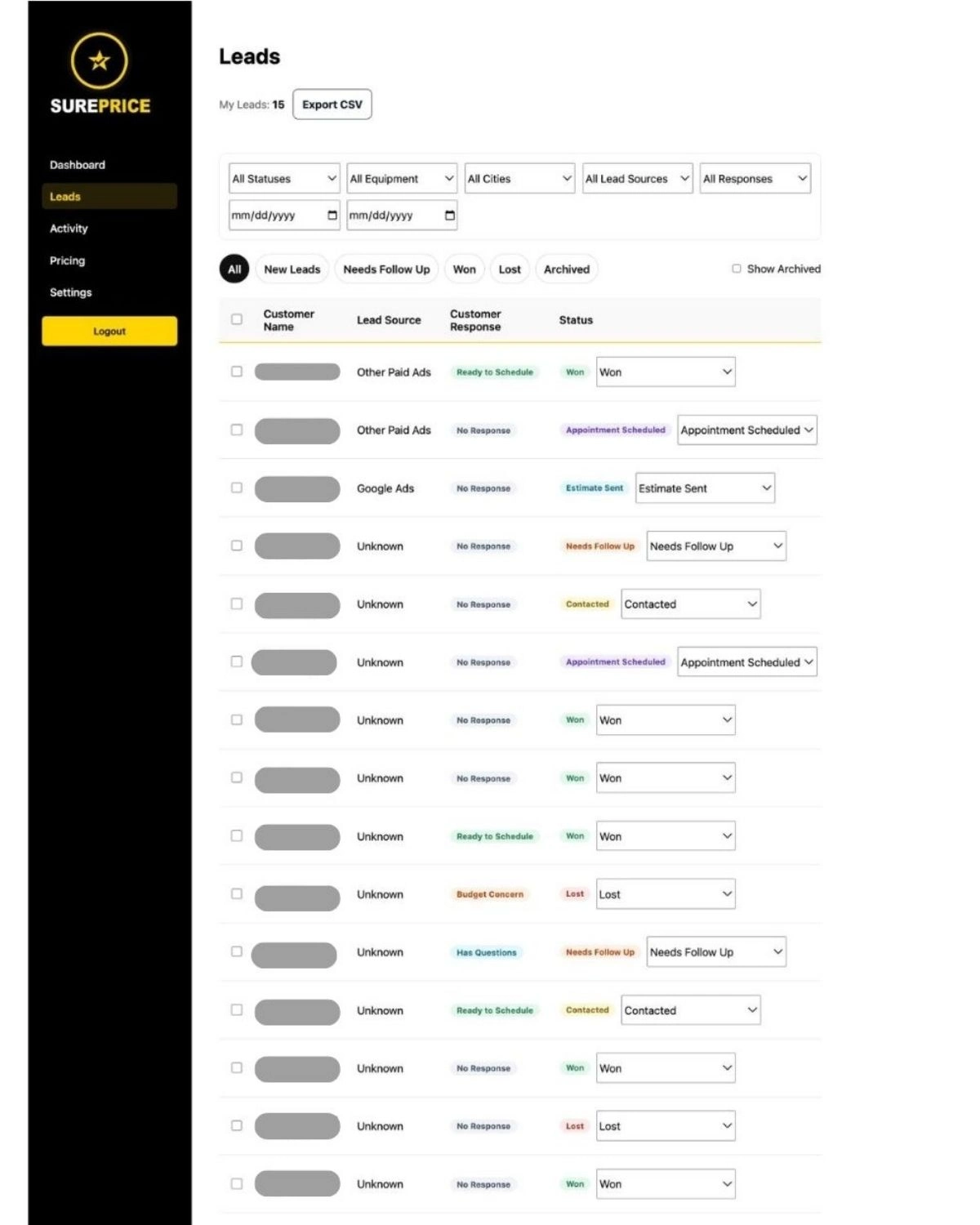
Depending on the configured experience, a pricing-session lead can include customer information, the replacement system requested, the estimate shown, buying stage, lead source, and relevant quote selections. The contractor can begin the conversation with more context about what the visitor already explored.
Price Sensitivity
Does Online Pricing Attract Price Shoppers?
Yes, some visitors using online pricing are researching price. Those visitors were already price-conscious whether or not the contractor displayed a number. Hiding pricing postpones the conversation; it does not remove budget considerations from the purchase.
The strategic question is whether useful information gives the contractor an opportunity to continue the relationship. A visitor may see that the likely investment is reasonably aligned and take the next step. Another may decide the project is outside their budget and never become a lead.
That second outcome is not automatically a failure. It may prevent both parties from spending time on a large expectation mismatch. At the same time, no contractor should assume online pricing automatically improves lead quality or close rates; the result depends on the offer, pricing, market, and follow-up process.
More Than One Path
Pricing Calculators Shouldn't Replace Every Contact Form
A strong HVAC website can provide multiple conversion paths. “Call Now,” “Schedule Service,” “Request an Estimate,” and “Explore Replacement Pricing” serve different levels of urgency and intent.
Repair customers may want the fastest route to service. Existing customers and referrals may already know they want contact. Replacement researchers may want to understand options and pricing first. A consultation-ready visitor may prefer to book immediately.
The pricing calculator should complement the website's existing conversion architecture, not force every visitor through a new single funnel.
Placement
Where an HVAC Pricing Tool Fits on the Website
Online pricing can appear on the homepage, a general HVAC replacement page, AC installation, furnace installation, and heat pump pages, financing content, a dedicated “See Pricing” page, or paid replacement landing pages. Repair and service pages may continue emphasizing scheduling or calling.
The appropriate placements depend on how traffic enters the site and what that page promises. A contractor can direct several relevant CTAs to one coherent pricing experience rather than create disconnected calculators everywhere.
For implementation planning, see how to add an HVAC pricing calculator to your website.
Intent-Based Architecture
The Better Question Isn't Form or Calculator
The better question is which CTA matches the homeowner's current intent.
Each path can be valuable. The mistake is assuming every website visitor should make the same commitment before receiving information relevant to their situation.
Deliver on the Promise
What Makes an HVAC Pricing Experience Useful?
- Keep the number of questions reasonable.
- Ask only what materially affects pricing or qualification.
- Give the visitor useful pricing information.
- Use contractor-controlled prices and replacement options.
- Make the experience mobile friendly.
- Explain clearly when online pricing is an estimate rather than a final contract price.
- Provide an obvious next step after the estimate.
A “calculator” that asks many questions and ends only with “We'll contact you with pricing” breaks the expectation created by offering an online quote. The interface may capture a form submission, but it has not delivered the information the visitor believed they were requesting.
Practical Recommendations
Contact Form vs. Online Pricing Decision Matrix
These are strategic starting points rather than universal rules. Contractors should adapt them to their services, market, and website journey.
SurePrice
Where SurePrice Fits
SurePrice is designed specifically for the pricing and qualification portion of the contractor website journey. It lets HVAC contractors put contractor-controlled replacement pricing online while capturing useful lead and quote context.
It is not a replacement for the contractor's CRM, dispatch software, scheduling platform, or entire website. It adds a pricing path for visitors who want to understand the project before deciding how to move forward.
Explore the complete HVAC pricing software experience or use the options below to see it from the homeowner's side.
Continue Learning
Related HVAC Pricing Guides
Browse the complete SurePrice Resource Center for more contractor pricing and lead-generation guidance.
Common Questions
HVAC Pricing Calculator vs. Contact Form FAQs
Is an HVAC pricing calculator better than a contact form?
Neither is universally better. A contact form fits visitors ready to ask a contractor for help, while a pricing calculator can serve replacement shoppers who want cost context before starting a conversation.
Should HVAC contractors remove estimate forms from their websites?
No. Estimate forms remain useful for visitors ready for a consultation, as well as many repair, referral, and returning-customer situations. Online pricing should add another conversion path rather than replace every form.
Do homeowners want to see HVAC prices online?
Some replacement shoppers want pricing context while researching, while others prefer to call or schedule immediately. A website can support both behaviors instead of assuming every visitor is at the same stage.
Does showing HVAC prices attract price shoppers?
Price-conscious visitors may use the information, but they were price-conscious before seeing it. Online pricing can help both sides recognize a major expectation mismatch earlier without guaranteeing that every visitor becomes a lead.
What information should an HVAC pricing calculator collect?
It should ask only for information that materially supports pricing or qualification, such as replacement type, relevant project details, configured options, service eligibility, and useful contact or quote context.
Should an HVAC pricing calculator give an actual price?
It should provide meaningful pricing information if it promises an online estimate. That may be a configured price or range, clearly labeled as an estimate when final sizing, scope, or installation conditions still require verification.
Where should an HVAC pricing calculator appear on a website?
Useful placements include the homepage, replacement and installation pages, financing content, a dedicated pricing page, and focused replacement landing pages. Repair pages may continue emphasizing calls or scheduling.
Can I use both online pricing and a traditional estimate form?
Yes. Using both allows the website to match different levels of urgency and buyer intent: service customers can call or schedule, researchers can explore pricing, and consultation-ready homeowners can request an estimate.
Bottom Line
Match the Conversion Path to Buyer Intent
Traditional contact forms and HVAC pricing calculators are not interchangeable. A form captures the visitor who is ready to say, “Contact me.” Online pricing can engage the visitor asking, “What might this cost?”
For HVAC replacement lead generation, the strongest website architecture may use both: direct service and consultation options for high-intent visitors, plus contractor-controlled pricing for shoppers who need useful information before they are ready to talk.